





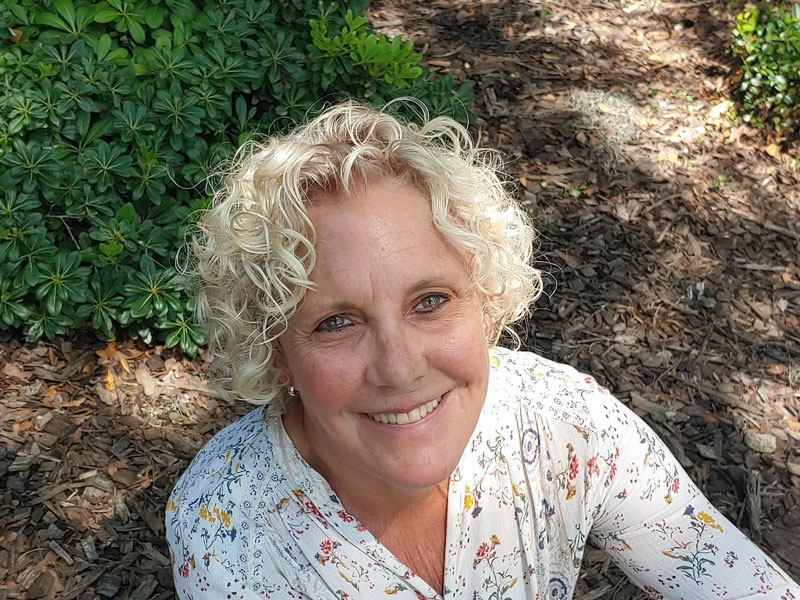
I’ve spent more than 25 years in oncology clinical trial research, including my time as Department Administrator for Investigational Cancer Therapeutics at MD Anderson. Here’s the truth: the CRO industry is under more pressure than at any other point in my career.
These are the trends I believe will decide which CROs are still standing in five years. And, as always, NO BULL.
- Capital Is Concentrated, and Every CRO Is Chasing the Same Sponsors
Biotech funding hasn’t gone away, but it has narrowed. Investors are backing fewer companies and want de-risked assets, clean data, and a clear path to the next value inflection point. The result is a smaller pool of well-funded sponsors, and every CRO is chasing the same programs.
CROs will have to change how they operate:
- Realistic EBITDA expectations. Margin targets set during the 2020–2021 boom don’t align with today’s market. Sponsors managing an 18-month runway will scrutinize every line of a budget and walk away from inflated pass-throughs and padded management fees.
- The end of backlog as a vanity metric. Backlog that isn’t converting to active, billable work doesn’t advance a single study. Sponsors don’t care about your book-to-bill ratio. They care about FPI.
- Financial discipline with sponsors. Late, inaccurate, or missing invoices are unacceptable. A sponsor who receives a reconciliation surprise months after the work is done will reasonably ask what else is being mismanaged.
- No revolving change-order doors. Scope should be defined honestly at the outset. When the change order becomes the business model, the relationship is already over.
- Invest in the People Who Actually Run the Studies
Too many CROs have become top-heavy and salary-heavy, with layers of leadership and business development and not enough CRAs, project managers, and CTAs doing the work that moves a study from contract to FPI.
Sites don’t activate on their own. Study start-up succeeds when a CRA has credibility with the research team, when a PM spots a contracting or budgeting bottleneck before it costs weeks, and when risks are mitigated throughout the duration of the study. Over 44% of clinical trials are delayed during study start-up. That isn’t a technology problem. It’s an execution problem, and execution depends on people.
Those team members must be valued as professionals, not treated as a headcount lever to satisfy the market. When a PM is carrying the workload of a 2.0 FTE across multiple protocols, quality suffers, burnout follows, and turnover comes next. Every departure takes site relationships and institutional knowledge with it.
Retention is not an HR initiative. It’s a quality, timeline, and revenue issue.
- AI Will Reshape Execution, but It Won’t Replace Judgment
AI has moved from pilots to operational use. The most meaningful applications I see are:
- Protocol optimization: helping to identify eligibility criteria and visit burdens that will constrain enrollment before the protocol is amended three times.
- Document generation and QC: speeding up the drafting and review of essential documents, regulatory packages, and clinical study reports.
- Risk-based quality management: detecting data anomalies and underperforming sites earlier, so monitoring resources go where they’re needed.
AI does not negotiate site contracts with cancer centers, IDNs, or community-based centers. It doesn’t understand why a particular PI is hesitant about a first-in-human dose-escalation design. It will not compensate for thin staffing or a lack of site relationships. CROs that use AI to support their people will pull ahead. Those that use it as a reason to cut the teams they rely on will learn that lesson at the sponsor’s expense.
- China Is a Serious Competitive Force
Chinese CROs are aggressively marketing to U.S. biotechs, positioning themselves as able to source and procure sites and run studies with the same quality as U.S.-based CROs, at a lower cost. For a capital-constrained sponsor, that pitch lands.
With the BIOSECURE Act now law and growing congressional scrutiny of trials conducted in China, sponsors must weigh data integrity, FDA acceptance, and geopolitical risk alongside the budget.
U.S. CROs will not win this on price, and they shouldn’t try. They win by demonstrating their value: deep familiarity with the U.S. regulatory environment; established relationships with academic, IDN, and community-based research centers; measurable speed from SSU to FPI and LPI; and mitigation of issues throughout the study lifecycle. Playing firefighter will not be a benefit. If a CRO can’t articulate why it’s worth the premium, it will lose the award.
- Small, Therapeutically Focused CROs Are the Future
I’ll acknowledge my perspective. I built a focused CRO by design, because I saw what happens to emerging biotechs inside large organizations.
For many emerging sponsors, a small CRO aligned to its therapeutic area is the better fit:
- Lower cost, without unnecessary global overhead
- Greater flexibility when the development plan changes, and in early-phase oncology it will
- Often faster, because decisions don’t move through multiple layers of governance
- Lower turnover, so the team that starts the study finishes it
- Greater transparency, including when the news is difficult to deliver
- Priority attention, so the biotech isn’t at the bottom of the pile behind a large pharma client
A sponsor with one asset and limited runway deserves a partner that treats that program as the priority it is.
- Relationships Remain the Foundation
Despite AI, consolidation, and global competition, one thing holds constant: this is a relationship business. Sites prioritize sponsors and CROs they trust. PIs open their doors to people who have earned their respect. Sponsors stay with partners who tell them the truth.
At the heart of it all are the patients. Every delay in SSU and FPI affects cancer patients waiting on a potential treatment, and they don’t have time to wait. The CROs that keep that front and center, value their people, and do what is right will define the next era of this industry.