


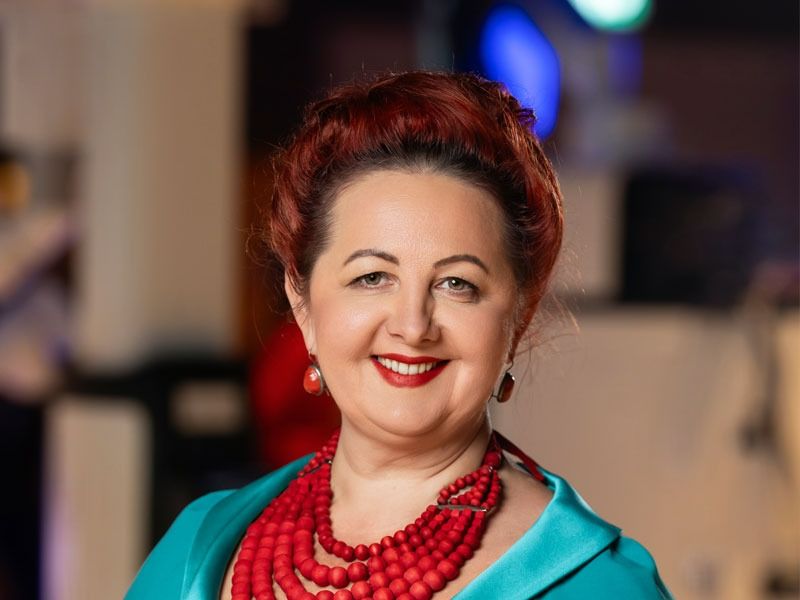
Consultant Gynaecologist, Urogynaecologist and Robotic Surgeon | NHS Ayrshire & Arran, Scotland We have never had more ways to treat uterine fibroids. From medical treatment and uterine artery embolisation to hysteroscopic, laparoscopic and robotic surgery, advances in technology have transformed what is possible.
Yet having more treatment options does not necessarily mean women have more choice. I sometimes wonder whether we are asking the wrong question. Rather than debating which procedure is best, perhaps we should be asking whether women can actually access the treatment that is right for them. Because a treatment that exists but remains inaccessible is not really a choice.
When symptoms become invisible
I remember a woman who had spent six years seeking help for heavy menstrual bleeding and suspected fibroids. She had repeatedly been reassured that there was little point investigating further. Why arrange a scan, she was told, when the only real treatment would be a hysterectomy? Meanwhile, her husband developed symptoms of prostatitis. Within a week, he had been assessed and treatment arranged.
The contrast was striking. This was not simply about waiting times. It was about the expectations we attach to women’s symptoms and the assumptions we make about what can be done.
For years, her symptoms had been accepted as something she should simply live with. Yet fibroids can profoundly affect women’s lives: heavy bleeding, anaemia, pain, pressure symptoms, difficulties at work and disruption to relationships and family life. We cannot offer meaningful treatment choice if we fail to investigate the problem in the first place.
The woman, not the fibroid
Two women with apparently similar fibroids may want entirely different things. One may prioritise preserving fertility. Another may want to retain her uterus despite having completed her family. Someone else may prefer definitive treatment, even if that means hysterectomy. Some women want to avoid surgery. Others value the lowest likelihood of needing further treatment.
All are legitimate priorities. As clinicians, we naturally focus on imaging, fibroid size, location and number. But these findings are only part of the picture. We also need to understand what the woman wants her life to look like after treatment. That is where genuine shared decision-making begins.
A toolbox, not a competition
Modern fibroid management offers an increasingly sophisticated range of options. Medical treatments can control symptoms for some women, while hysteroscopic myomectomy can treat suitable submucosal fibroids without abdominal incisions. This may involve conventional transcervical resection of fibroids (TCRF) or hysteroscopic tissue-removal systems such as MyoSure.
Uterine artery embolisation offers an effective, uterus-preserving alternative for appropriately selected women, although the possibility of further intervention and considerations around future pregnancy require careful discussion.
For women requiring surgery, laparoscopic or robotic myomectomy may allow fibroid removal while preserving the uterus. Hysterectomy remains an important definitive option, increasingly achievable through minimally invasive approaches.
None of these treatments is universally superior. Their suitability depends on clinical circumstances, reproductive plans, expected outcomes and personal preferences. The problem arises when the available treatment is determined less by what the woman needs and more by what her local hospital can provide.
When local limitations become clinical limitations
Consider hysteroscopic fibroid surgery. Techniques and equipment have advanced considerably, yet access to trained surgeons and appropriate facilities remains uneven. The same applies to advanced laparoscopic and robotic surgery, particularly for complex benign gynaecological conditions.
A procedure may be entirely feasible in one centre but unavailable in another. I remember another woman with a very large fibroid uterus. She had been advised that open surgery was her only option and that a minimally invasive approach would be too dangerous. After seeking another opinion, she subsequently underwent robotic minimally invasive surgery. Before her operation, she was understandably reluctant to consider returning home the same day.
A few hours afterwards, she surprised herself by asking why we were keeping her in hospital. She felt ready to go home. Her experience illustrates something important. What is not possible in one setting is not necessarily impossible elsewhere. Of course, not every woman with large fibroids is suitable for minimally invasive surgery. Clinical judgement, safety and appropriate expertise remain paramount. But we should be careful not to confuse the limitations of our local service with the limits of modern medicine.
Innovation beyond the operating theatre
At University Hospital Crosshouse in Scotland, we have challenged traditional assumptions about major benign gynaecological surgery. By combining robotic-assisted surgery with redesigned perioperative pathways, multidisciplinary teamwork and an expectation of recovery at home where clinically appropriate, we have made same-day discharge routine for the great majority of our robotic gynaecology patients.
Our experience includes complex fibroids, large uteri, previous surgery and women with high body mass index. But the robot is not the most important part of this story. The real innovation is changing the pathway, the expectations and ultimately the experience of the woman receiving care.
The same principle applies to embolisation, hysteroscopic surgery and other advances in fibroid management. Technology creates possibilities. Services determine whether patients benefit from them.
From individual procedures to genuine choice
We need closer collaboration between gynaecologists, interventional radiologists and other specialists, supported by shared decision-making and effective referral networks. Not every hospital can offer every procedure. But every woman should have access to an informed discussion about the treatments appropriate for her, including those available beyond her local hospital.
We should measure success not simply by the number of procedures performed, but by symptom improvement, quality of life, safety, durability, treatment access and the ability to return to everyday life. We have become remarkably good at developing new treatments. Perhaps we now need to become equally good at ensuring women can access them.
The future belongs to the patient
The future of fibroid treatment will not belong to embolisation, robotics, laparoscopy or any other individual technology. It will belong to services that use all available treatments intelligently, safely and equitably. Because the real measure of progress is not how many procedures we can offer. It is how many women can receive the care that is right for them.