


The future of nursing will not be defined by those who simply master today’s clinical skills. It will be shaped by nurses who have the confidence to question yesterday’s practices, evaluate evidence critically, and lead meaningful change for tomorrow’s patients.
For decades, nursing education has excelled at preparing students to provide safe, compassionate, evidence-based care. Those foundational skills remain essential. Yet healthcare has entered an era where clinical knowledge alone is no longer enough. Today’s nurses must also become innovators, quality improvement leaders, systems thinkers, and catalysts for transformation.
The next generation of nurses will inherit increasingly complex patients, workforce shortages, rapidly evolving technology, and unprecedented expectations for quality and patient experience. Nursing schools therefore have an opportunity—and responsibility—to prepare graduates not simply to enter practice, but to improve it.
Curiosity Is a Clinical Competency
One of the most valuable characteristics a new nurse can possess is curiosity.
Healthcare often develops routines that become accepted simply because “that’s how we’ve always done it.” While many practices remain appropriate, others persist despite evidence suggesting safer, more efficient alternatives.
Nursing students should graduate comfortable asking questions such as:
- Why do we perform this procedure this way?
- What evidence supports this practice?
- Is there a better experience for patients?
- Can technology help us deliver safer care?
- What barriers prevent improvement?
These questions are not signs of inexperience. They are signs of professional growth.
Innovation rarely begins with a million-dollar investment. More often, it begins with someone asking why.
Leadership Is Not Reserved for Titles
Many nurses mistakenly believe leadership begins after becoming a charge nurse, manager, or executive.
In reality, leadership begins the moment a nurse accepts responsibility for improving care.
One of the greatest misconceptions in healthcare is that meaningful change requires decades of experience. Some of the most impactful ideas originate from bedside clinicians who understand workflow better than anyone else.
Early-career nurses often recognize inefficiencies because they have fresh perspectives. Rather than teaching students simply to adapt to existing systems, nursing schools should encourage them to evaluate those systems critically while learning how to improve them through collaboration rather than criticism.
This mindset develops resilient professionals who become active participants in healthcare transformation instead of passive observers.
Quality Improvement Should Become Core Nursing Practice
Quality improvement should not be viewed as a specialty reserved for administrators.
It is bedside nursing.
Whether reducing falls, preventing infections, improving medication safety, decreasing hospital-acquired conditions, or enhancing patient experience, nurses are uniquely positioned to identify opportunities for improvement because they spend more time with patients than any other healthcare professional.
At our community hospital, we challenged one longstanding clinical practice surrounding blood culture collection. Rather than accepting contamination as an unavoidable reality in emergency medicine, our multidisciplinary team evaluated the evidence, redesigned workflows using a structured Plan-Do-Study-Act (PDSA) framework, standardized education, and introduced needle-free blood culture collection technology.
The results exceeded expectations.
During implementation, blood cultures collected using the new process demonstrated significantly lower contamination rates while overall patient satisfaction improved. The initiative reduced unnecessary antibiotic exposure, improved diagnostic reliability, minimized repeated needle sticks, and strengthened trust in the patient experience.
What began as a quality improvement initiative ultimately became a demonstration that frontline nursing leadership can reshape clinical practice.
That lesson belongs in every nursing classroom.
Psychological Safety Drives Innovation
Innovation does not flourish where people fear speaking up.
Students entering the profession should understand that psychological safety is not simply an organizational buzzword—it is a patient safety strategy.
When nurses feel safe asking questions, admitting uncertainty, identifying risks, and proposing solutions, organizations improve.
Likewise, nursing faculty play an essential role by modeling environments where questioning assumptions is encouraged rather than discouraged.
Healthcare advances because people respectfully challenge existing practices with evidence, collaboration, and shared purpose.
Future nurse leaders must learn that influence is built through trust—not authority.
Developing Nurses Who Think Like Systems Leaders
Healthcare increasingly demands leaders who understand more than clinical care.
Tomorrow’s nurses must appreciate how staffing, finance, technology, quality metrics, workforce engagement, patient experience, and operational efficiency interact to influence outcomes.
This broader systems perspective allows nurses to identify solutions that improve care while supporting sustainability.
Leadership education should therefore extend beyond communication and delegation. Students benefit from exposure to improvement science, implementation strategies, healthcare economics, data interpretation, and change management alongside traditional clinical education.
These skills prepare graduates not only to provide exceptional care but to strengthen the organizations in which they serve.
Human-Centered Leadership Remains Essential
While technology continues transforming healthcare, nursing’s greatest strength remains profoundly human.
Patients remember how they were treated long after they forget laboratory values or treatment plans.
Likewise, nurses thrive in environments where they feel valued, supported, and connected to purpose.
Throughout my leadership journey, I have found that organizational success follows when leaders genuinely invest in people.
Over the past several years, our emergency department focused intentionally on culture, mentorship, and workforce development. Those efforts helped eliminate reliance on agency nurses, improve staff retention, strengthen engagement, and create an environment where innovation became everyone’s responsibility rather than leadership’s assignment alone.
Healthcare organizations do not transform because of policies.
They transform because people choose to believe improvement is possible.
Looking Ahead
On March 31, 2026, I had the privilege of presenting “Breaking the Status Quo: Driving Practice Change for Patients”at the American Organization for Nursing Leadership (AONL) Annual Conference in Chicago—the nation’s largest nursing leadership conference. The session explored how patient-centered innovation, evidence-based quality improvement, and courageous nursing leadership can reshape everyday clinical practice while producing measurable outcomes for patients and communities. The presentation emphasized practical strategies leaders can use to challenge routine practices, build multidisciplinary coalitions, and create sustainable change through psychological safety and structured improvement methods.
The experience reinforced a belief I carry into every conversation with future nurses: transformational leadership does not begin with a title. It begins with a willingness to ask better questions and act on the answers.
As nursing education evolves, we should continue teaching clinical excellence while equally emphasizing innovation, leadership, quality improvement, and systems thinking.
Author Bio
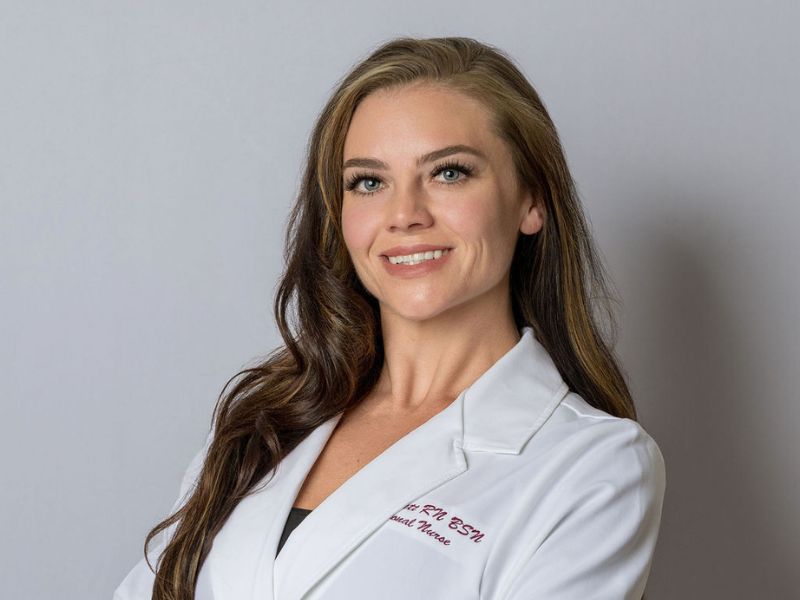
Taylor Barrett, MBA, BSN, RN, is the Emergency Department Director at Lake Havasu Regional Medical Center and an accomplished healthcare executive specializing in emergency medicine operations, workforce development, and quality improvement. She is nationally recognized for leading nurse-driven innovation, including implementation of the nation’s first needle-free blood culture collection program using PIVO™ technology. Taylor is a recipient of the Lifepoint Mercy Award and the Arizona Hospital and Healthcare Association (AzHHA) Outstanding Patient/Community Impact Award and has presented nationally at the 2026 American Organization for Nursing Leadership (AONL) Annual Conference on nursing-led practice transformation. She holds an MBA in Healthcare Administration from Western Governors University and a BSN from California State University, Channel Islands.