



The Global Oncology Crisis: A Systemic Turning Point
Cancer control has reached a critical juncture worldwide. According to global epidemiological estimates, over 19.3 million new cancer cases are diagnosed annually, generating an unprecedented human and economic burden across every continent. Despite extraordinary advances in targeted therapies, precision radiation, and molecular oncology, clinicaloutcomes remain vastly unequal globally.
This crisis exposes a fundamental flaw in traditional public health models: an over-reliance on reactive, late-stagehospital care rather than proactive prevention, risk stratification, and early interception.
The global fight against cancer is hindered by systemic failures, strategic flaws, socioeconomic gaps, and global isolation. Systemic failures include fragmented coordination, poor data tracking, and non-evidence-based policies, while strategic flaws stem from high disease complexity, a reactive overemphasis on late-stage treatment, and innovation inertia.
Additionally, socioeconomic gaps like inequitable healthcare access, underfunded programs, low public awareness,and patient non-adherence are exacerbated by global isolation due to minimal international cooperation.
The Parallel Burden: Metabolic Risks and Non-Communicable Diseases
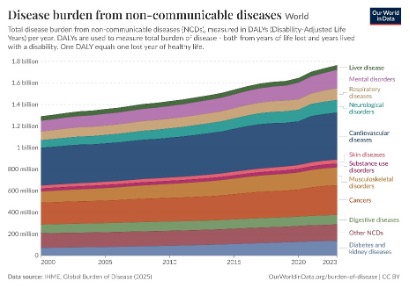
Figure 1: Global Epidemiological Trends in NCDs & Metabolic Drivers (2005–2025)
Dismantling the Low and Middle Income (LMIC) Fallacy
A major barrier to effective policy is the rigid reliance on World Bank classifications, such as grouping nations under the generic label of Low- and Middle-Income Countries (LMICs).
Designing cancer strategies strictly around macroeconomic indicators fails for three critical reasons:
- Territorial Heterogeneity: Advanced metropolises with high-income healthcare infrastructure coexist withunderserved rural areas lacking basic diagnostic
- Double Epidemiological Burden: Developing health systems face a dual challenge—cancers linked to infections(HPV, Hepatitis B, Helicobacter pylori) persist alongside rapid increases in lifestyle- and age-related tumors (breast, prostate, colorectal).
- Isolation from NCD Frameworks: Cancer initiatives frequently operate in organizational silos instead of integrating into broader NCD agendas to maximize public funding and institutional commitment.
Effective planning requires classifying health systems by their level of oncological and chronic diseases structuretogether with the development and regional capabilities, rather than relying solely on national GDP metrics.
Latin America as a Case Study in Structural Disparities
The challenges observed globally are clearly visible in Latin America and the Caribbean, which registers approximately 1.47 million new cancer cases (7.6% of the global total) and over 713,000 annual deaths. The primary bottleneck in Latin America is not a lack of technical knowledge or clinical talent; the region boasts highly trained specialists and establishedmedical societies. Instead, structural failure stems from system fragmentation, political short-termism, and a reactive funding model that prioritizes late-stage treatment over sustained prevention.
Furthermore, metabolic drivers have accelerated rapidly across the region over the past 20 years. Below is the regional epidemiological distribution breakdown:
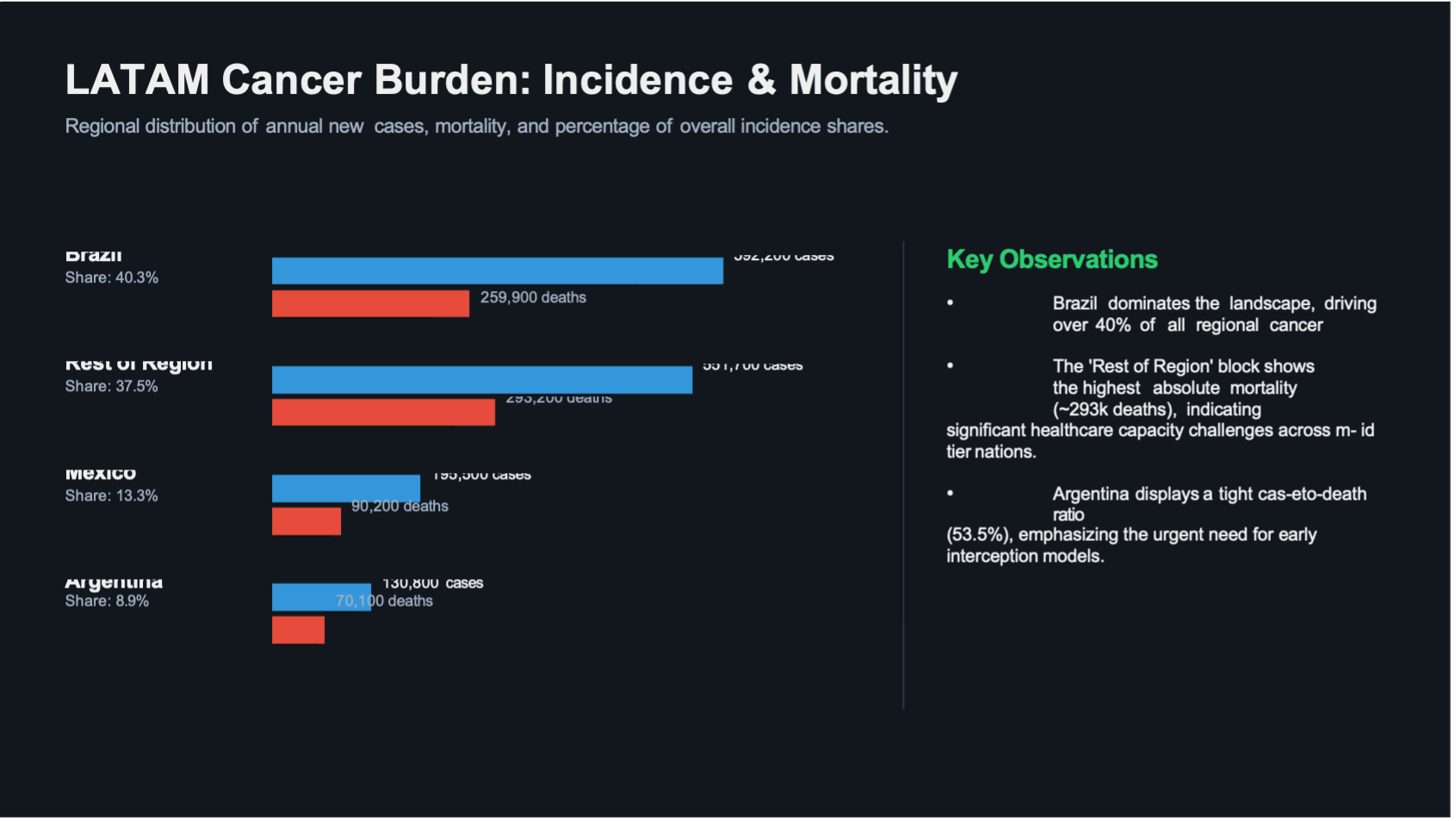
Ref: International Agency for Research on Cancer (IARC). (2024/2026). Global Cancer Observatory (GCO): Cancer Incidence and Mortality Estimates in Latin America and the Caribbean. World Health Organization. Retrieved from The Global Cancer Observatory
The Classic Prevention Continuum in Cancer: A Strategic Framework
Modern cancer control requires transitioning from fragmented interventions to a continuous, four-tiered prevention model:
- Primary Prevention: Reducing carcinogen exposure (tobacco, UV, pollution), promoting healthy nutrition, and maximizing universal vaccination (HPV, HBV).
- Secondary Prevention: Organized population screening programs (mammography, HPV DNA testing, colonoscopy, PSA).
- Tertiary Prevention: Multidisciplinary management of diagnosed cases to prevent progression, incorporating targeted therapies, rehabilitation, and supportive care.
- Quaternary Prevention: Protecting patients from medical over-intervention, overdiagnosis, and overtreatment to prioritize quality of life.
Collaborative efforts—such as the Latin American and Caribbean Code Against Cancer (developed with IARC/WHO)—demonstrate how evidence-based prevention guidelines can be successfully tailored to local sociocultural and economic contexts.
Ultra-Screening: The Next Frontier in Global Oncology
The hallmark of this new paradigm is Ultra-Screening (hyper-early detection). While standard screening detects early,asymptomatic anatomical lesions, ultra-screening identifies cancer risk or pre-malignant changes at the genomic andmolecular level—well before a structural tumor is visible on conventional imaging.
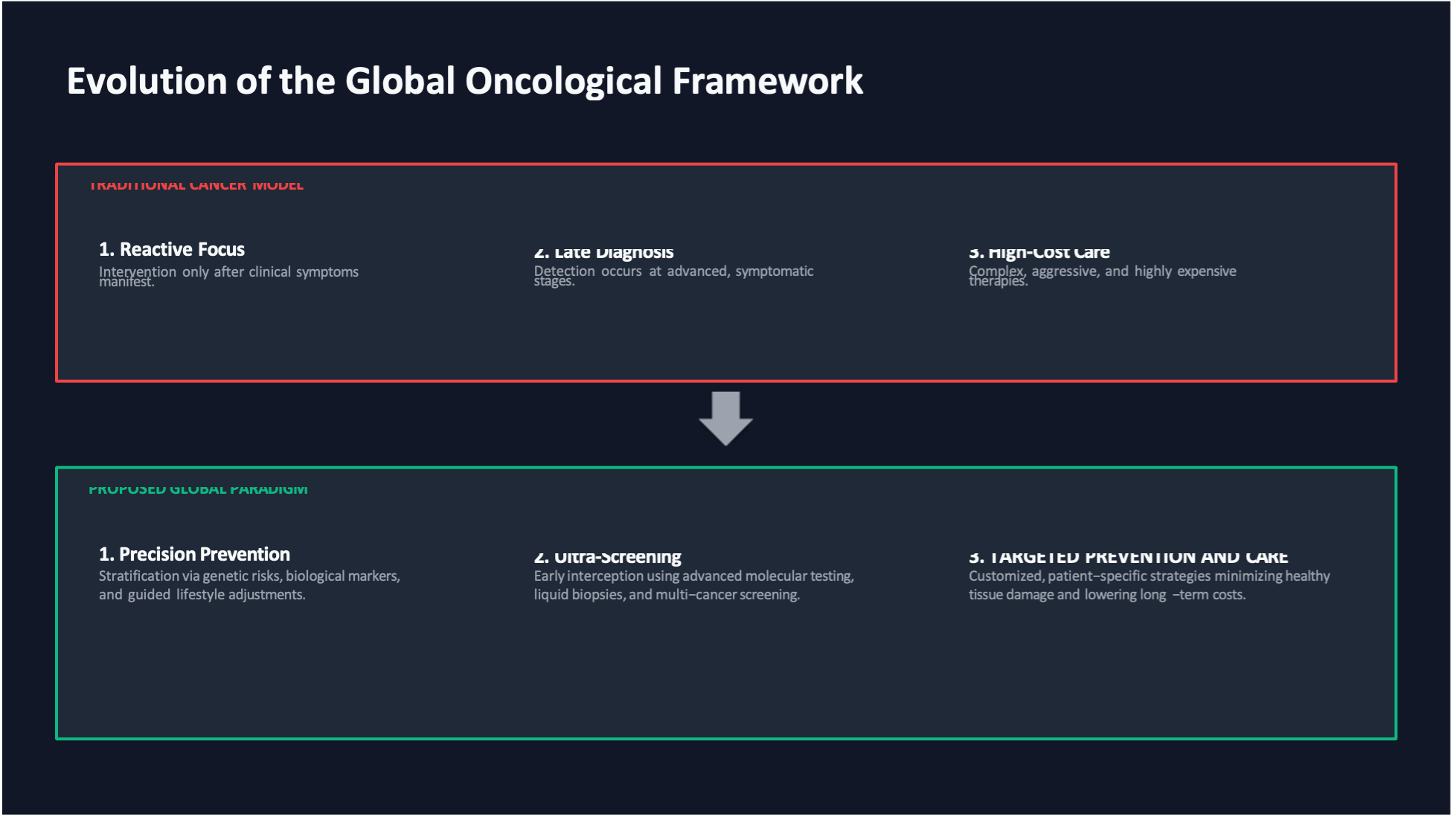
Ref. E. Cazap, 2016
Key Advantages for Health Systems:
- Resource Optimization: Stratifying individual risk eliminates the need for universal, non-targeted mass screening, easing operational loads on healthcare infrastructure.
- Maximum Curability: Early molecular detection enables curative, minimally invasive interventions before disease progression occurs.
- Scalable Solution for Emerging Regions: Where maintaining universal, resource-intensive infrastructure (suchas widespread colonoscopy networks) is logistically difficult, biomarker-based ultra-prevention offers an efficient, targeted alternative.
Risk Reduction Strategies in Chronic Diseases and Cancer
The traditional reactive framework fails to integrate modern chronic disease risk reduction strategies, which areessential to mitigate preventable physiological triggers before permanent, long-term pathologies develop, shifting theclinical focus from perpetual symptom management to true early interception. Effectively expanding risk reduction requires a systemic evolution toward proactive healthcare, centered on the advanced stratification of genetic predispositions and the aggressive clinical management of shared modifiable lifestyle factors, such as metabolic syndrome, chronic systemic inflammation, insulin resistance, tobacco harm and nicotine dependence, and prolonged environmental or behavioral exposures.
Comprehensive public health policy must balance aggressive risk reduction to prevent the onset of Non-Communicable Diseases with pragmatic harm reduction strategies that minimize health damage for individuals living with active risk factors or chronic conditions.
Conclusion
Overcoming the global cancer burden requires moving beyond rigid, one-size-fits-all templates designed solely for high-income nations. By embracing precision risk reduction, abandoning outdated economic labels (such as resource disparities based strictly on GDP), and adopting scalable ultra-screening technologies, the international community canbuild equitable, resilient, and sustainable health systems lowering the disease incidence and protecting healthy populations.