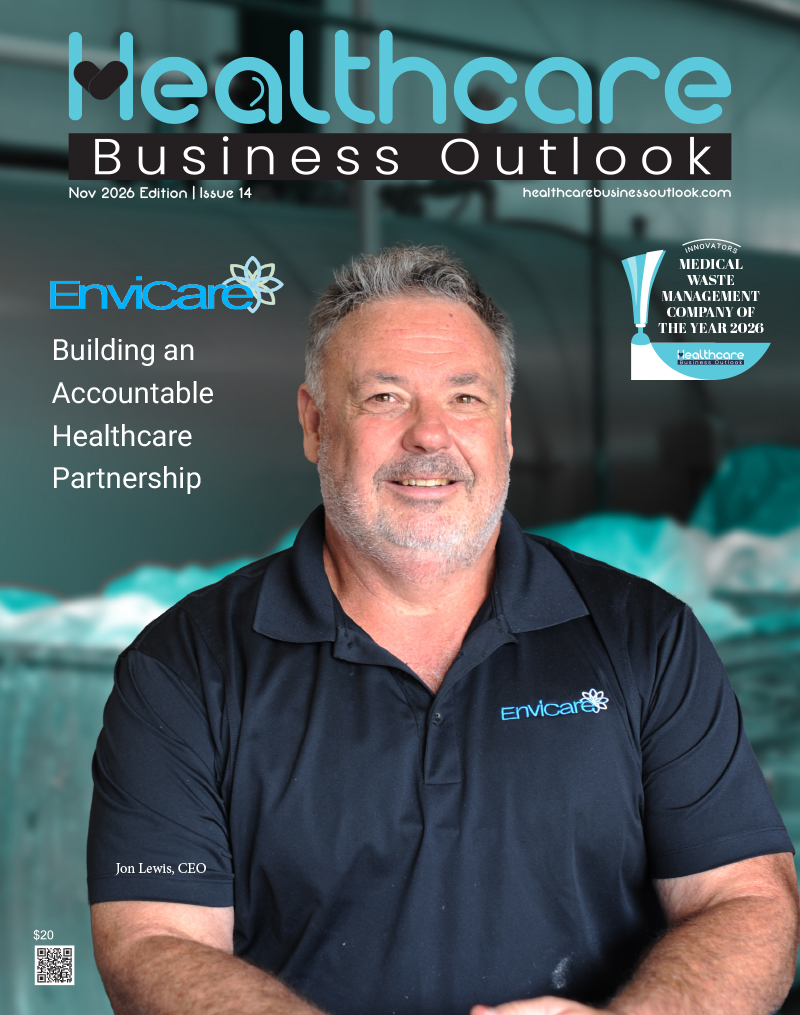
EnviCare is reshaping medical waste management around a larger objective: reducing operational burden, strengthening compliance and giving healthcare organizations a partner capable of facilitating growth.
In healthcare, some of the most consequential operational systems are the ones patients rarely see. Regulated medical waste is one of them. When the system works, containers are properly placed, employees know how to use them, collections occur as expected, documentation is immediately available, waste remains secure throughout its chain of custody and compliance becomes part of the operating routine.
When the system breaks down, the consequences can extend well beyond waste disposal. Staff attention is diverted. Patient-care areas can be affected. Compliance exposure increases. Administrators become involved in problems they should never have needed to manage. That distinction is central to EnviCare’s view of the medical waste business.
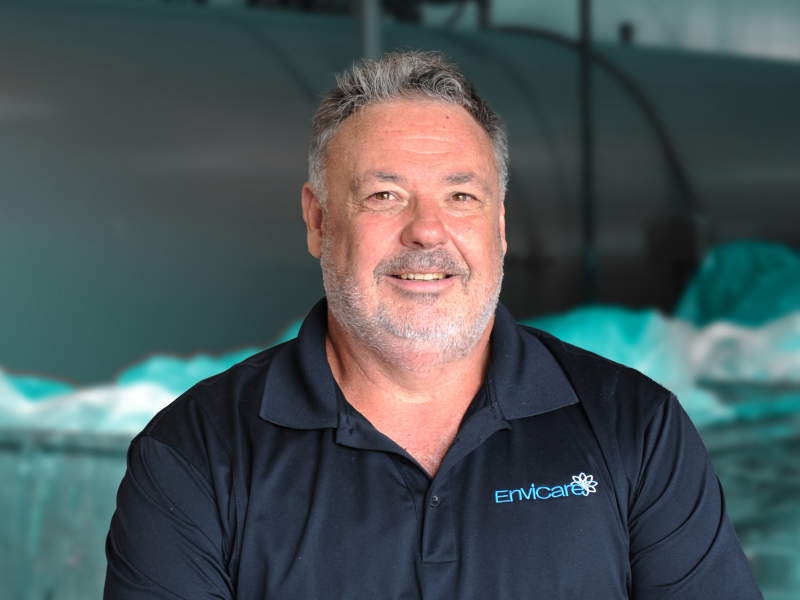
The Cartersville, Georgia-based company has built its model around a simple premise: healthcare organizations should expect more from a regulated medical waste provider than transportation and disposal. They should expect accountability for the process, visibility into what is happening and a partner capable of adapting as the healthcare organization itself changes. “We’re not so much about what we do, it’s how we do it when it comes to managing medical waste,” says Jon Lewis, CEO of EnviCare. For EnviCare, the “we care” is increasingly what defines the company.
Moving Accountability Closer to the Customer
Reliability in a regulated environment is not created by a single policy or technology. It depends on a series of activities working together—from employee practices inside the healthcare facility to collection, transportation, treatment and final documentation.
EnviCare deliberately pushes responsibility closer to the point of service. EnviCare’s drivers are DOT trained and serve as more than transportation personnel. Because they are regularly inside customer facilities, they become an additional set of trained eyes—identifying overfilled containers, packaging concerns or changing service requirements and communicating those observations back to the broader EnviCare team.
The objective is not to police the customer. It is to prevent small issues from becoming larger ones. That same philosophy extends to compliance education. EnviCare provides continuing customer training in areas including regulated medical waste and bloodborne pathogens, helping facilities keep employees current and prepare for regulatory and accreditation requirements. Compliance, however, is treated as the foundation rather than the ultimate outcome. A compliant process should also be practical, reliable and capable of supporting the people responsible for patient care. “Our aim is to find the right solutions, not point out problems that facilities face,” says Steven McLendon, President of EnviCare. That mindset becomes particularly important when regulations change. Rather than simply communicating a new requirement, the company works with customers to understand what the change means operationally and how it should be incorporated into everyday practice.
Visibility From Collection Through Final Treatment
Healthcare executives increasingly expect visibility from critical vendors, particularly where regulatory responsibility remains with the healthcare organization. EnviCare’s chain-of-custody process is designed around that expectation. Waste is manifested as it moves through the system. Customers receive confirmation when material reaches the EnviCare facility and documentation following treatment. Electronic records provide access to the documentation necessary to demonstrate how regulated material was transported, received and processed. The value is less about producing another report than eliminating uncertainty.
A healthcare organization should not have to wonder where regulated material is, whether it was received or whether treatment documentation will be available when an inspector or accreditation team requests it. The objective is straightforward: once responsibility has been transferred to EnviCare, the customer should have complete confidence that the process is being managed.
One Relationship Instead of Multiple Silos
The same principle has influenced EnviCare’s expansion beyond regulated medical waste. Healthcare organizations frequently manage medical waste, sharps, compliance, secure document destruction, records management and other specialized services through different suppliers, contracts, schedules and points of contact. Each relationship may function independently. Collectively, however, they create administrative complexity.
EnviCare’s CompleteCare strategy is intended to reduce that fragmentation by bringing more of those responsibilities under a single accountable relationship. The strategic value is not simply purchasing several services from the same company. It is reducing the number of systems the healthcare organization has to manage. Through its broader capabilities—including regulated medical waste, compliance support, secure shredding and document-management services—EnviCare is working toward an operating environment in which customers can place greater responsibility with one partner while maintaining visibility and control.
For healthcare leaders, that translates into fewer moving parts, clearer accountability and less management attention devoted to functions outside the organization’s primary mission.
Panola Hospital: Choosing a Partner for Where You Are Going
That philosophy can be seen in EnviCare’s relationship with Panola Hospital. When the hospital came under new ownership, leadership was not simply maintaining an existing operation. The organization was strengthening the facility from the ground up and establishing the systems required for its next stage of development. Regulated medical waste and compliance were only one part of that effort, but they were part of the operational foundation that had to be right. Panola selected EnviCare during that period.
The relationship began with understanding the hospital as it existed at the time—its service requirements, waste streams, compliance needs and staff—and then establishing a program capable of changing as the hospital changed.
EnviCare also provided continuing compliance training designed around Panola’s needs, helping employees understand not only the requirements surrounding regulated medical waste but their role in maintaining a safe and professional healthcare environment.
As Panola continued to improve and grow, its requirements evolved. The service relationship evolved with them. That experience illustrates an important consideration for healthcare organizations evaluating critical service providers:
Choose partners for where the organization is going, not simply for what it needs today.
“We have to understand the requirement from the hospital’s perspective and ultimately from the patient’s perspective. If our work is creating another problem for their staff to manage, we have missed the point. Our job is to fit into their operation, anticipate what they need and help their people remain focused on caring for patients.”
The significance of the Panola experience is not that a waste-management program was implemented successfully. It is that a support partner became part of the infrastructure enabling the organization to move forward.
Reliability as an Operating Discipline
Reliability is easy to promise and considerably harder to engineer. Perhaps the most telling measure for EnviCare is not a percentage. Company leadership does not recall having lost a customer because of service performance. That degree of retention reflects an operating philosophy in which reliability is designed into the service model rather than treated simply as a customer-service objective. Routing decisions are based on actual volumes, service requirements and regulatory considerations rather than automatically accepting a historical collection schedule. Where appropriate, the company may recommend changing frequency to improve reliability, efficiency or regulatory margin.
Transportation resilience receives similar attention. EnviCare structures its leased-fleet support so that when a vehicle is unexpectedly taken out of service, replacement equipment can typically be put into service within a couple of hours.
The goal is straightforward: a truck problem should remain EnviCare’s problem—not become the customer’s problem.
Because decision-making remains close to the operation, the company can also respond without forcing unusual requests through multiple organizational layers.
That agility has been tested. In one instance, a major Hospital System faced an urgent situation when another provider removed hundreds of large waste containers weeks before a planned service transition. EnviCare received the call at approximately 3 p.m. on a Friday. Transportation was organized immediately.
Equipment traveled roughly ten hours and began arriving at the customer’s facility before daylight the following morning. The significance was not simply the speed of the delivery. For the customer, an unexpected supplier problem had the potential to become an operational problem. EnviCare’s role was to prevent that from happening. Those moments reveal more about a service organization than routine collections ever will.
Growth Should Change the Service Model—Not Break It
Healthcare organizations do not remain static. Patient volumes change. New service lines are introduced. Facilities expand. Organizations acquire additional locations. Waste volumes increase. Compliance requirements evolve. Yet many service arrangements are designed around a snapshot of the customer at the moment the contract is signed.
EnviCare is taking a different approach. Its service philosophy assumes that the program should evolve with the customer. Increased volume should trigger a discussion about the appropriate service model, routing, equipment and infrastructure—not simply an automatic penalty for exceeding yesterday’s assumptions.
The same thinking shapes the company’s physical expansion. Rather than establishing infrastructure first and then attempting to create enough business to support it, EnviCare looks for concentrations of customer demand that justify bringing infrastructure closer to the market.
In practical terms: Customer density precedes infrastructure.
Its CarePoint strategy reflects that demand-led model. As concentrations of customers and services grow, EnviCare can move capabilities closer to them, creating greater service depth without building unnecessary overhead ahead of demand. For customers, the relevance is significant. Their service partner can become more capable as the market develops while remaining connected to the requirements that justified the expansion in the first place.
Growing Across the Southeast Without Losing Proximity
EnviCare’s growth strategy is focused on expanding its presence across the Southeast while maintaining the characteristics that established its customer relationships in the first place. The challenge is not simply becoming larger.
It is becoming larger without losing accessibility, responsiveness, accountability and the ability to make decisions close to the customer. That requires disciplined growth. Customer density will guide infrastructure. Technology will provide greater visibility. Additional services will deepen customer relationships. Standardized processes will allow the organization to scale. But EnviCare’s leadership does not view scale and personal accountability as opposing ideas.
The objective is to create scale around the customer rather than at the expense of the customer. New infrastructure follows demonstrated customer need, allowing the organization to expand geographically while maintaining service proximity and operating discipline. For EnviCare, the Southeast provides the opportunity to build that model deliberately—market by market, relationship by relationship and only where customer demand supports the next level of infrastructure.
The Standard Healthcare Organizations Should Expect
Regulated medical waste will always require compliant collection, transportation, treatment and documentation. Those are the minimum requirements of the industry.
The larger opportunity is to remove unnecessary complexity from healthcare organizations. A strong partner should help prevent problems, not merely respond to them. It should make compliance easier to maintain. It should provide visibility without requiring constant oversight. It should adapt as the organization grows. And when something unexpected occurs, accountability should be immediately clear.
Ultimately, the measure is not how much attention the waste program receives. It is how little attention the healthcare organization needs to give it. For EnviCare, that is the standard it is building toward: becoming the accountable partner behind a safe, compliant and reliable support environment—so healthcare organizations can devote more of their people, time and attention to the reason they exist in the first place. Their patients.