

A year ago, the AI conversation in healthcare centered on readiness. Were we prepared? Would it help clinicians? Could we trust it? Today, for most health systems, that debate has moved on. The tools are in the building, and clinicians are feeling the relief of lighter documentation and fewer clicks.
The more pressing question is, how can AI help us do what patient safety has always struggled to do: see harm coming and stop it? For decades, we've learned mostly by looking backward, after the fall, the missed diagnosis, the medication error. AI gives us a chance to look forward, to build an early-warning system that spots the signs of harm before anyone would call it an event, while there's still time to change the outcome. Used with intention, it can bring us closer to Zero Harm, 24/7.
What Predictive Safety Actually Looks Like
Consider the following example. A patient on a medical-surgical unit starts a new sedating medication. No single data point looks alarming, but a predictive model is reading the whole picture: the medication change, shifting lab values, a nurse's note about unsteadiness, reduced mobility, and a pattern of overnight falls on similar units. Hours before anything happens, it flags an elevated risk of a fall.
The care team takes it from there. That flag doesn't sit in an inbox. It routes to the charge nurse and triggers a defined response: A pharmacist reviews the medication, the team adjusts rounding, a bed alarm goes on, and the patient and family are told why. The fall never happens, and no one files an event report, because there is no event.
That is the shift from reactive to proactive, and the same logic extends well beyond falls: early deterioration, infections, medication discrepancies, missed test results, and patient comments that hint at a concern long before it becomes an event. With experience intelligence layered in, we can spot needs, risks, and friction earlier, from patients at risk of a safety event to caregivers who need support.
The algorithm wasn't what made this work. The link between insight and action was. A prediction that changes nothing protects no one.
Why Safety Comes First
Safety is the tip of the spear for experience. You can't close the experience gap without it; it's the precondition for everything else. Being safe and feeling safe aren't the same, but they're connected. Safe, high-quality care drives the experience, and specific changes in how we deliver it can shape whether the person in the bed believes they're in good hands or not. Early warning serves both: Care that anticipates problems feels different to a patient than care that reacts to them.
Putting AI in the Right Places
The organizations making the most progress aren’t adopting AI across the entire organization at once. They focus first on the repetitive risks their teams encounter regularly, like falls, inconsistent handoffs, or missed follow-ups, and employ AI where it helps them act sooner – from spotting a risk to deciding who needs to make the next call. A few principles:
- Ask the floor before you flip the switch. Sit down with nurses and physicians and ask which alerts they already ignore. Too many warnings can be as dangerous as none: if people think someone is crying wolf, they stop listening. Use what you hear to decide which warnings are worth sending, and to whom.
- Run a drill before you go live. Rehearse with the whole team, the way you would a code drill. Simulate a warning arriving at 3 a.m. and watch how people communicate and make judgment calls: Who sees it? Who acts? What gets missed? Fix what you learn before a patient is affected.
- Govern AI like any other safety-critical practice. Set up a standing group of clinical, safety, IT, and operations leaders to decide what gets implemented and where. Track every tool with a named owner, and review its performance over time so you can adjust and optimize based on what is working.
- Measure what changes at the bedside. An AI implementation can look right on paper and still change nothing for patients. Track whether warnings lead to action, how quickly, and whether safety events are averted. Then add one more measure: how the technology affects your staff, so you notice early if you've traded one problem for another.
Staying Mindful and Learning From Everything
The risks I've written about before haven't gone away; in predictive tools, they carry higher stakes. A model trained mostly on one population can fail others. Clinicians can lean on a score and lose sight of their own judgment, and that gut feeling if something seems off must always have room to override the model. If we don’t have equity among implementation of the latest AI in hospitals, we risk a two-tiered system of early warning. And patients deserve to know when AI is part of their care.
Staying mindful ultimately comes back to learning. Every event, near miss, and "good catch" holds a lesson, but we only learn when we hear about it. Reporting a concern takes time busy clinicians don't always have. That’s where AI can help. AI can turn a few lines of free text into a complete report, so speaking up takes less effort and more concerns come forward. It can then surface patterns across thousands of reports and help leaders decide what to tackle first.
But the loop has to close. When the model flagged a patient and we intervened, when it missed something, when it was simply wrong, those outcomes should flow back to refine, retrain, or retire the tool. And none of it works unless people feel safe saying, "this didn't look right." No technology fixes a punitive culture.
AI doesn't have shift changes, and it doesn't get tired. But Zero Harm, 24/7, still depends on the people who act on what it sees and learn from what it misses. Our goal remains to support the people who make safety possible, every day. Pair prediction with action, and action with learning, and we can stop treating harm as something we only study after the fact.
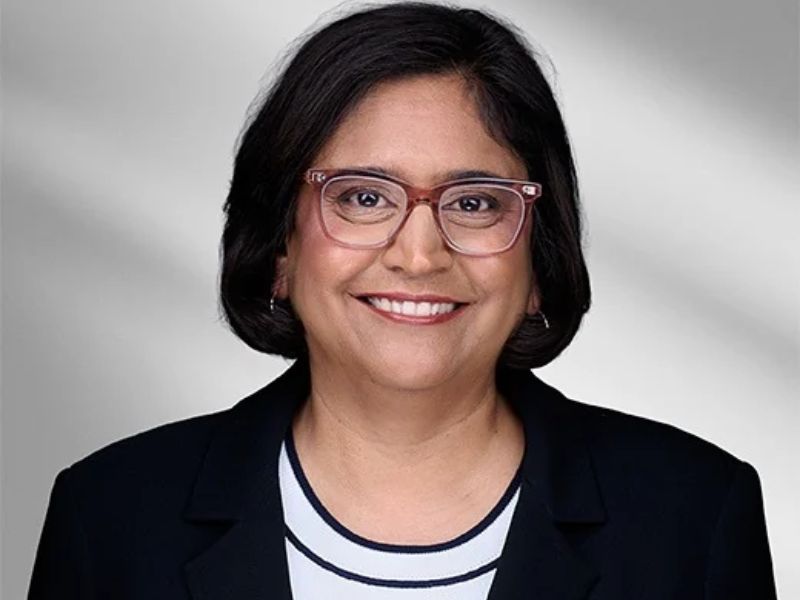
Dr. Tejal Gandhi is Chief Health AI and Quality Officer at the Qualtrics XM Institute, where she advances the use of artificial intelligence, predictive insights, and experience intelligence to improve healthcare safety, quality, and outcomes. Her work focuses on helping organizations identify risks earlier, prevent harm, and build safer systems of care for patients and healthcare professionals.