


The missing link in the future of care: why commercial resilience matters as much as clinical excellence.
We talk about who will care for our ageing populations. Who will support patients after hospitalisation. Who will meet the growing demand for increasingly complex care.
We debate funding, workforce shortages, technology and patient outcomes.
But there's a question that rarely gets asked.
Who's Looking After the Businesses That Look After Us?
Because behind every care service is an organisation that must remain financially viable, operationally resilient and capable of investing in the people who deliver it.
And if those organisations cannot sustain themselves, neither can the care we depend upon.
The Invisible Foundations of Good Care
When someone leaves hospital following surgery, illness or injury, their recovery often depends on a network of providers working beyond the hospital walls.
Home care organisations, rehabilitation services, community healthcare teams and specialist providers all play a part in helping people regain independence and avoid unnecessary readmission.
We rightly measure their performance through patient outcomes, safety, responsiveness and quality.
But how often do we examine the commercial foundations supporting that delivery?
A provider can offer exceptional care, employ dedicated professionals and enjoy an excellent reputation while simultaneously struggling with cash flow, rising costs, inefficient processes or contracts that are no longer financially sustainable.
These challenges may be largely invisible to patients until something goes wrong.
A recruitment freeze. Reduced capacity. A service withdrawn. An organisation forced to close.
Suddenly, what appeared to be a business problem becomes a care problem.
The sustainability of care and the sustainability of the organisations delivering it are not separate conversations. They are fundamentally connected.
Clinical Excellence Is Not the Same as Commercial Capability
Many care organisations are founded or led by people whose expertise lies in caring for others.
They understand patients, clinical standards, safeguarding, complex needs and the importance of compassionate, person-centred services.
But running a sustainable organisation demands an additional set of capabilities.
Financial forecasting. Pricing. Contract negotiation. Workforce planning. Cash-flow management. Digital systems. Business development. Strategic leadership.
These are not peripheral administrative activities. They influence whether an organisation can continue delivering its services.
Consider a provider that wins a new contract to deliver additional care hours.
On paper, that looks like growth.
But if the contract does not adequately account for staffing costs, travel time, supervision, training and operational overheads, the organisation may find itself delivering more care while becoming less financially sustainable.
More Activity Does Not Always Mean a Stronger Business
I've long believed that businesses don't grow. People do.
And nowhere is that more relevant than in care, where the strength of an organisation is inseparable from the capability of the people leading it.
We can invest in systems, technology and infrastructure, but unless we also invest in the people making decisions, managing resources and navigating change, we risk addressing the symptoms without strengthening the foundations.
Why Funding Alone Cannot Solve Everything
Adequate funding is fundamental.
Care providers cannot be expected to maintain safe, high-quality services indefinitely where commissioning arrangements or reimbursement levels fail to reflect the true cost of delivery.
But the sustainability conversation cannot begin and end with funding.
We must also ask whether organisations have the skills, information and systems to make the best possible decisions with the resources available.
Do leaders understand the true cost of delivering each service?
Can they identify which contracts support sustainable delivery and which may be placing the organisation under pressure?
Do they have reliable forecasts of staffing requirements, demand and cash flow?
Are digital tools reducing administrative burden and improving productivity?
Do they have the confidence to negotiate, collaborate and develop new opportunities?
These questions matter because better commercial decisions can create greater organisational stability.
And stability creates the conditions for investment in people, services and quality.
This is not about asking care providers to become more commercially aggressive.
It is about enabling them to become more commercially capable.
The Cost of Constantly Operating in Survival Mode
One of the greatest challenges facing organisations under sustained pressure is the loss of time and space to think strategically.
When leadership teams are constantly responding to immediate demands, longer-term planning becomes a luxury.
The next staffing shortage takes priority over workforce development.
The next contract renewal takes priority over reviewing the business model.
The next operational problem takes priority over improving systems and processes.
Organisations can become highly skilled at surviving from one challenge to the next without building the resilience needed to change their circumstances.
Yet resilience is not simply the ability to withstand pressure.
It is the ability to anticipate, adapt and make decisions that strengthen the organisation over time.
That requires leaders to understand their financial position, recognise opportunities and risks, and translate strategic intentions into practical action.
It also requires support that goes beyond providing information.
An occasional workshop may introduce useful ideas. But meaningful change happens when organisations can apply those ideas, embed new practices and measure the results.
Knowledge matters. Implementation changes outcomes.
We need to invest in the businesses behind the care
If we genuinely want a sustainable post-acute care system, commercial capability must become part of the wider support infrastructure.
That means recognising that business development, financial management, operational improvement and leadership capability are not distractions from delivering care.
They help make delivery possible.
Commissioners, healthcare systems, policymakers and business support organisations have an opportunity to work more collaboratively with providers, particularly smaller and medium-sized organisations that may not have access to extensive commercial expertise.
Support should be practical, proportionate and focused on the challenges providers actually face.
For some, the priority may be understanding costs and improving financial visibility.
For others, it may be workforce planning, digital adoption, negotiating sustainable contracts or developing partnerships that create more resilient services.
There is no single solution.
But there is a common principle: we cannot continue to place increasing expectations on care providers without strengthening their ability to meet them sustainably.
We cannot measure the sustainability of care solely by the number of services commissioned or the outcomes achieved today.
We must also ask whether the organisations delivering those services will have the financial resilience, leadership capability and operational capacity to continue delivering them tomorrow.
The Question We Should Be Asking
The future of post-acute care will undoubtedly involve innovation, new technologies, more integrated services and different models of delivery.
All of these developments have the potential to improve patient experiences and outcomes.
But innovation alone will not sustain a care system if the organisations expected to deliver it lack the commercial foundations to survive and adapt.
Behind every care provider are employees, leaders, patients and families whose lives are affected by the organisation's ability to continue operating.
When a provider becomes financially vulnerable, the consequences rarely remain confined to its balance sheet.
They ripple through the wider care system.
Perhaps it's time we stopped treating business sustainability as something that happens behind the scenes and started recognising it as part of the infrastructure of care itself.
Because the future of care depends not only on the expertise and compassion of the people providing it, but on the resilience of the organisations standing behind them.
If we want care that is safe, continuous and sustainable, we must also look after the businesses that look after us.
About the Author
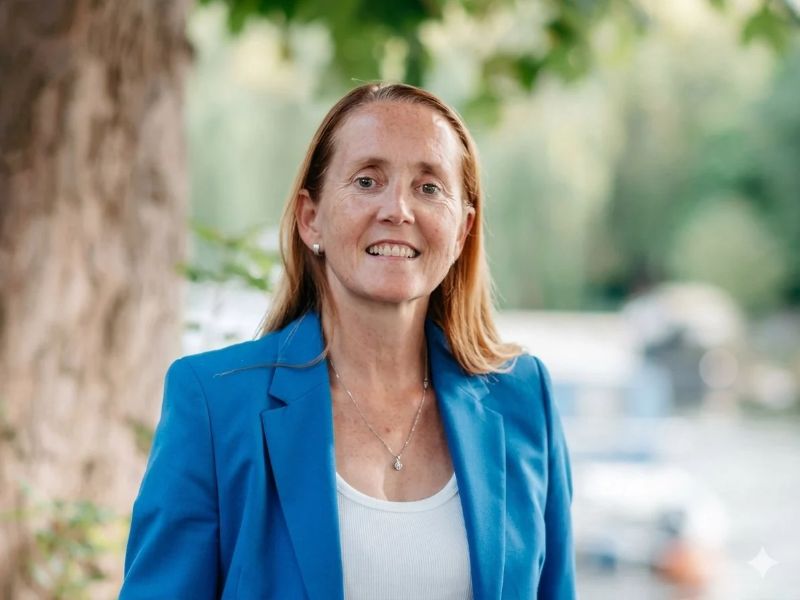
Helen Roberts is a business growth strategist, Founder and CEO of CPG Executive Consulting Ltd, and Founder of MyGrowthPod®.
Guided by her philosophy that “Businesses don't grow. People do,” Helen works with business leaders, care providers and public-sector organisations to strengthen the commercial capability, leadership and resilience needed for sustainable growth.
Her work bridges business strategy and practical implementation, helping organisations build stronger foundations, make better decisions and translate ambition into measurable outcomes. She is particularly interested in the relationship between organisational sustainability, leadership capability and the long-term wellbeing of the communities those organisations serve.
www.cpgexp.com | www.mygrowthpod.com